

A ceiling bulb lights up a room from above. They come in all sorts of shapes, sizes, and types, depending on what kind of light you need and what your fixture is.
💡 **Types of Ceiling Bulbs (by Tech)**
| Type | Description | Good | Not good |
| :---------------------------- | :---------------------------------------- | :--------------------------------------------------------------------- | :------------------------------------------------------------------------ |
| LED (Light Emitting Diode) | The go-to, energy-saving bulbs these days. | Uses way less power, lasts ages (15,000–50,000 hours), doesn't get hot. | Costs more at the start. |
| CFL (Compact Fluorescent Lamp) | An older type of energy-saving bulb. | Uses less power than old bulbs, lasts a decent time (6,000–10,000 hrs). | Has mercury inside, takes a while to warm up, not sold in some places now. |
| Incandescent | The really old-school bulb. | Gives a warm light, turns on instantly, cheap to buy. | Wastes lots of energy, doesn't last long (around 1,000 hours). |
| Halogen | A better version of the old bulb. | Brighter, colors look good, turns on right away. | Gets hot and uses more power than LEDs. |
| Smart Bulbs | Usually LEDs you can control wirelessly. | You can dim them, change colors, and put them on timers. | You need to set them up with an app, costs extra. |
⚙️ **Common Bulb Shapes & Codes**
| Shape Code | Name | What It's Usually For |
| :--------- | :-------------------- | :-------------------------------- |
| A (A19) | Standard round bulb | Regular ceiling lights |
| B / C | Candle or torpedo | Fancy ceiling lights, chandeliers |
| BR / R | Reflector | Recessed lights |
| PAR | Parabolic reflector | Spotlights, outdoor lights |
| G | Globe | Bathroom lights |
| T | Tube | Long ceiling lights |
🔌 **Base Types (How They Fit)**
| Code | Name | What It Is |
| :----- | :------------------------- | :----------------------------------------- |
| E27 | Standard Screw | The most used in homes. |
| E26 | US version of E27 | |
| B22 | Bayonet | Used in the UK, India, and some Asian places. |
| GU10 | Twist-and-lock | For spotlights in ceilings. |
| G9, G4 | Pin Connectors | Small or decorative lights. |
💡 **Important Things to Know**
| Parameter | What It Means | What You Might See |
| :------------------ | :------------------------------------------- | :--------------------------------------- |
| Wattage (W) | How much power it eats up | 5–20W (LED) = 40–100W (old bulb) |
| Lumens (lm) | How bright it is | 400–1600 lm for most rooms |
| Color Temperature (K) | How warm or cold the light looks | 2700K (warm) → 6500K (daylight) |
| CRI | How real colors look under the light | 80+ = okay, 90+ = great |
| Voltage | 120V (US) or 240V (other countries) | Get the right one for your country |
| Dimmable | Can you turn the brightness up and down | Check the box |
| Beam Angle | How wide the light shines | 30°–120° |
⚡ **Saving Energy**
LEDs use way less energy (up to 85% less) than old bulbs.
Check for energy labels (like A+++) to find the best ones.
Look for labels like ENERGY STAR to know it's good.
🧰 **Putting It In**
Turn the power off first!
Use the right base and voltage.
For recessed lights, get the size right (like 4-inch).
Don't touch the LED part or halogen bulb with your bare hands.
If the light is covered, make sure the bulb can handle the heat.
🌈 **Light Color Guide**
| Room | Color of Light | Brightness |
| :---------- | :----------------- | :----------------- |
| Bedroom | Warm | Not too bright |
| Living Room | In the middle | A bit brighter |
| Kitchen | Cool White | Pretty bright |
| Bathroom | Cool | A bit brighter |
| Office | Like daylight | As bright as can be |
🔋 **How Long They Last**
LED bulbs: 15,000–50,000 hours
Halogen: 2,000–4,000 hours
Old bulbs: Around 1,000 hours
Clean the lights to keep them bright.
Keep water away unless it's a special bathroom bulb.
🧠 **Cool Stuff (If You Want)**
Some modern bulbs can do things like:
* Work with your voice (Alexa, etc.)
* Turn on and off by themselves
* Change colors
* Go with your music
💡 **Types of Ceiling Bulbs (by Tech)**
| Type | Description | Good | Not good |
| :---------------------------- | :---------------------------------------- | :--------------------------------------------------------------------- | :------------------------------------------------------------------------ |
| LED (Light Emitting Diode) | The go-to, energy-saving bulbs these days. | Uses way less power, lasts ages (15,000–50,000 hours), doesn't get hot. | Costs more at the start. |
| CFL (Compact Fluorescent Lamp) | An older type of energy-saving bulb. | Uses less power than old bulbs, lasts a decent time (6,000–10,000 hrs). | Has mercury inside, takes a while to warm up, not sold in some places now. |
| Incandescent | The really old-school bulb. | Gives a warm light, turns on instantly, cheap to buy. | Wastes lots of energy, doesn't last long (around 1,000 hours). |
| Halogen | A better version of the old bulb. | Brighter, colors look good, turns on right away. | Gets hot and uses more power than LEDs. |
| Smart Bulbs | Usually LEDs you can control wirelessly. | You can dim them, change colors, and put them on timers. | You need to set them up with an app, costs extra. |
⚙️ **Common Bulb Shapes & Codes**
| Shape Code | Name | What It's Usually For |
| :--------- | :-------------------- | :-------------------------------- |
| A (A19) | Standard round bulb | Regular ceiling lights |
| B / C | Candle or torpedo | Fancy ceiling lights, chandeliers |
| BR / R | Reflector | Recessed lights |
| PAR | Parabolic reflector | Spotlights, outdoor lights |
| G | Globe | Bathroom lights |
| T | Tube | Long ceiling lights |
🔌 **Base Types (How They Fit)**
| Code | Name | What It Is |
| :----- | :------------------------- | :----------------------------------------- |
| E27 | Standard Screw | The most used in homes. |
| E26 | US version of E27 | |
| B22 | Bayonet | Used in the UK, India, and some Asian places. |
| GU10 | Twist-and-lock | For spotlights in ceilings. |
| G9, G4 | Pin Connectors | Small or decorative lights. |
💡 **Important Things to Know**
| Parameter | What It Means | What You Might See |
| :------------------ | :------------------------------------------- | :--------------------------------------- |
| Wattage (W) | How much power it eats up | 5–20W (LED) = 40–100W (old bulb) |
| Lumens (lm) | How bright it is | 400–1600 lm for most rooms |
| Color Temperature (K) | How warm or cold the light looks | 2700K (warm) → 6500K (daylight) |
| CRI | How real colors look under the light | 80+ = okay, 90+ = great |
| Voltage | 120V (US) or 240V (other countries) | Get the right one for your country |
| Dimmable | Can you turn the brightness up and down | Check the box |
| Beam Angle | How wide the light shines | 30°–120° |
⚡ **Saving Energy**
LEDs use way less energy (up to 85% less) than old bulbs.
Check for energy labels (like A+++) to find the best ones.
Look for labels like ENERGY STAR to know it's good.
🧰 **Putting It In**
Turn the power off first!
Use the right base and voltage.
For recessed lights, get the size right (like 4-inch).
Don't touch the LED part or halogen bulb with your bare hands.
If the light is covered, make sure the bulb can handle the heat.
🌈 **Light Color Guide**
| Room | Color of Light | Brightness |
| :---------- | :----------------- | :----------------- |
| Bedroom | Warm | Not too bright |
| Living Room | In the middle | A bit brighter |
| Kitchen | Cool White | Pretty bright |
| Bathroom | Cool | A bit brighter |
| Office | Like daylight | As bright as can be |
🔋 **How Long They Last**
LED bulbs: 15,000–50,000 hours
Halogen: 2,000–4,000 hours
Old bulbs: Around 1,000 hours
Clean the lights to keep them bright.
Keep water away unless it's a special bathroom bulb.
🧠 **Cool Stuff (If You Want)**
Some modern bulbs can do things like:
* Work with your voice (Alexa, etc.)
* Turn on and off by themselves
* Change colors
* Go with your music
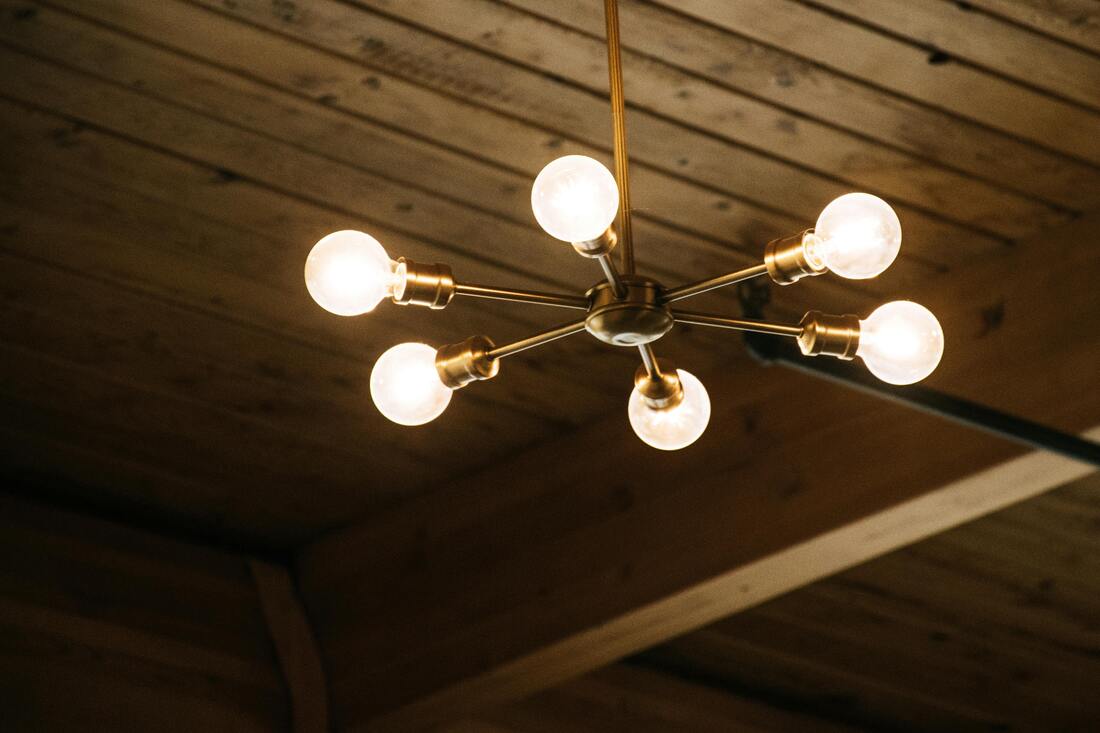
A ceiling bulb is just a light source that you put in your ceiling to light up a room. Unlike lamps, they normally spread light all over the place.
You can stick them in all sorts of things:
* Pendant lights
* Lights that sit flush or almost flush against the ceiling
* Recessed lights (those can lights)
* Chandeliers
* Track lighting
* Ceiling fans with lights
What kind of bulb you pick changes how the room looks, how much power you use, and how often you gotta change the bulb.
**2. The Main Types of Bulbs**
**a. LED (Light Emitting Diode)**
These are the most popular now, and they're really good at saving energy.
They turn electricity straight into light without much heat.
* How long they last: 15,000–50,000 hours
* Power use: 3–20 watts (works like a 25–150W old-school bulb)
* You can get them in all shapes, sizes, and colors.
*Good Points*
* Uses way less power (80–90%) than those old bulbs.
* Lasts a super long time (10–20 years if you use them normally).
* Doesn't get too hot, so they're good for closed-in fixtures.
* You can hook them up to smart home stuff (change colors, dim, set timers).
*Bad Points*
* Cost more at first (but they last so it balances out).
* Some don't dim unless they say they do.
**b. CFL (Compact Fluorescent Lamp)**
These use gas and a coating to make light.
* How long they last: 6,000–10,000 hours.
* Uses about 70% less power than those old bulbs.
*Good Points*
* Save energy compared to old bulbs.
* You can find them pretty easily (but they're being phased out in some places).
*Bad Points*
* They have a tiny bit of mercury, so you gotta be careful when you throw them out.
* Take a sec to get to full brightness.
* Don't like being turned on and off a lot.
**c. Incandescent**
The classic bulb with a wire inside that glows, that looks good.
* How long they last: About 1,000 hours.
* Give off a warm, comfy light.
*Good Points*
* Instant, warm light.
* Cheap to buy.
*Bad Points*
* Waste a ton of energy (mostly as heat).
* Don't last long.
* They're getting rid of these because they waste too much power.
**d. Halogen**
A newer version of those old bulbs, but with gas inside to make them better.
* Brighter and whiter light.
*Good Points*
* Colors look good under this light (pretty close to natural).
* Small and you can dim them.
*Bad Points*
* Get really hot and don't save as much power as LEDs.
* Don't last as long (~2,000–4,000 hours).
**e. Smart Bulbs**
Usually LEDs that can connect to Wi-Fi, or Bluetooth.
* Control them with your phone or voice.
*Things you can do:*
* Change how bright and what color they are.
* Set timers and schedules.
* Hook them up to your smart home system.
*Things to think about:*
* They're pricier.
* Gotta set them up on your network.
* If your Wi-Fi is down, they might not work right.
**3. Common Bulb Shapes**
Here's a quick guide:
* **A19 / A60:** Regular light bulb - good for most lights
* **B / C:** Candle-shaped - for chandeliers
* **BR30 / BR40:** Round - for recessed lights
* **PAR20 / PAR30 / PAR38:** Spotlights
* **G25 / G30 / G40:** Round like a globe - bathrooms
* **T8 / T12 / T5:** Long tubes - offices, kitchens
* **MR16 / GU10:** For track lighting
The shape changes how the light looks:
* A-types spread light nicely.
* BR/PAR bulbs shine light down.
* Candle/globe bulbs look fancy.
**4. Base Types**
* **E27 / E26:** Normal screw-in - most lights use these
* **B22 / B22d:** Twist-in - common in some countries
* **GU10:** Twist-and-lock - spotlights
* **G9 / G4 / G24:** Two pins - small lights
* **E14:** Small screw-in - chandeliers
*Make sure the base matches your light fixture!*
**5. Tech Stuff**
Here are some things you might see on the box:
* **Watts (W):** How much power it uses.
* **Lumens (lm):** How bright it is.
* **Color Temperature (K):** How warm or cool the light looks.
* **CRI:** How accurate colors look under the light.
* **Voltage:** The electric standard.
* **Beam Angle:** How wide the light shines.
* **Dimmable:** Can you make it brighter or dimmer?
* **Power Factor:** How good it is at using power.
**6. Saving Energy**
LEDs are the best at saving energy.
Look for these labels:
* **EU:** A++ to G
* **India:** BEE Star
* **US:** ENERGY STAR
The higher the lumens per watt (lm/W), the better!
* LED: 80–120 lm/W
* Old Bulbs: 10–15 lm/W
**7. Light Colors**
* **2200–2700K:** Warm, cozy - bedrooms, living rooms
* **3000–3500K:** Soft white - dining rooms
* **4000–4500K:** Natural - kitchens, offices
* **5000–6500K:** Bright - bathrooms, garages
*Warm light feels nice and cozy. Cool light helps you see better.*
**8. Color Accuracy (CRI)**
This tells you how real colors look under the light.
* 70–79: Okay
* 80–89: Good
* 90+: Great for kitchens, art, makeup
**9. How to Install**
* Turn off the power first!
* Check the wattage and base.
* If it's a recessed light, get the right size.
* Don't use a bulb with more watts than the fixture says.
* Don't touch halogen or LED bulbs with your bare hands.
* If it's a closed fixture, make sure the bulb can handle it.
* For bathrooms, use bulbs that can handle moisture.
**10. How Long They Last**
* **LED:** Really Long
* **CFL:** Pretty long
* **Halogen:** Not that long
* **Incandescent:** Short
*Tips:*
* Keep them clean.
* Replace all bulbs at once so the color matches.
* Be careful when you throw out CFLs.
**11. Environment Stuff**
LEDs are the best for the environment. CFLs have mercury so don't throw them in the trash.
**12. Smart Features**
Some bulbs can:
* Connect to Alexa or Google
* Change colors
* Turn on with motion
**13. Which Bulb for Which Room?**
* **Bedroom:** Dim, warm
* **Living Room:** Dimmable, soft
* **Kitchen:** Bright
* **Bathroom:** Bright, moisture-proof
* **Office:** Super bright
* **Hallway:** Soft
**14. Problems?**
* **Flickering:** Get a better dimmer or power supply.
* **Buzzing:** Get a better bulb or dimmer.
* **Turning off:** Might be overheating or losing connection.
* **Not bright enough:** Get a brighter bulb.
**15. Cheat Sheet**
* **Type:** LED
* **Base:** Standard screw-in
* **Color:** Warm or Cool
* **Brightness:** 800–1600
* **How Long:** Super Long
* **Saves Energy:** YES
* **Smart:** If you want 'em.
You can stick them in all sorts of things:
* Pendant lights
* Lights that sit flush or almost flush against the ceiling
* Recessed lights (those can lights)
* Chandeliers
* Track lighting
* Ceiling fans with lights
What kind of bulb you pick changes how the room looks, how much power you use, and how often you gotta change the bulb.
**2. The Main Types of Bulbs**
**a. LED (Light Emitting Diode)**
These are the most popular now, and they're really good at saving energy.
They turn electricity straight into light without much heat.
* How long they last: 15,000–50,000 hours
* Power use: 3–20 watts (works like a 25–150W old-school bulb)
* You can get them in all shapes, sizes, and colors.
*Good Points*
* Uses way less power (80–90%) than those old bulbs.
* Lasts a super long time (10–20 years if you use them normally).
* Doesn't get too hot, so they're good for closed-in fixtures.
* You can hook them up to smart home stuff (change colors, dim, set timers).
*Bad Points*
* Cost more at first (but they last so it balances out).
* Some don't dim unless they say they do.
**b. CFL (Compact Fluorescent Lamp)**
These use gas and a coating to make light.
* How long they last: 6,000–10,000 hours.
* Uses about 70% less power than those old bulbs.
*Good Points*
* Save energy compared to old bulbs.
* You can find them pretty easily (but they're being phased out in some places).
*Bad Points*
* They have a tiny bit of mercury, so you gotta be careful when you throw them out.
* Take a sec to get to full brightness.
* Don't like being turned on and off a lot.
**c. Incandescent**
The classic bulb with a wire inside that glows, that looks good.
* How long they last: About 1,000 hours.
* Give off a warm, comfy light.
*Good Points*
* Instant, warm light.
* Cheap to buy.
*Bad Points*
* Waste a ton of energy (mostly as heat).
* Don't last long.
* They're getting rid of these because they waste too much power.
**d. Halogen**
A newer version of those old bulbs, but with gas inside to make them better.
* Brighter and whiter light.
*Good Points*
* Colors look good under this light (pretty close to natural).
* Small and you can dim them.
*Bad Points*
* Get really hot and don't save as much power as LEDs.
* Don't last as long (~2,000–4,000 hours).
**e. Smart Bulbs**
Usually LEDs that can connect to Wi-Fi, or Bluetooth.
* Control them with your phone or voice.
*Things you can do:*
* Change how bright and what color they are.
* Set timers and schedules.
* Hook them up to your smart home system.
*Things to think about:*
* They're pricier.
* Gotta set them up on your network.
* If your Wi-Fi is down, they might not work right.
**3. Common Bulb Shapes**
Here's a quick guide:
* **A19 / A60:** Regular light bulb - good for most lights
* **B / C:** Candle-shaped - for chandeliers
* **BR30 / BR40:** Round - for recessed lights
* **PAR20 / PAR30 / PAR38:** Spotlights
* **G25 / G30 / G40:** Round like a globe - bathrooms
* **T8 / T12 / T5:** Long tubes - offices, kitchens
* **MR16 / GU10:** For track lighting
The shape changes how the light looks:
* A-types spread light nicely.
* BR/PAR bulbs shine light down.
* Candle/globe bulbs look fancy.
**4. Base Types**
* **E27 / E26:** Normal screw-in - most lights use these
* **B22 / B22d:** Twist-in - common in some countries
* **GU10:** Twist-and-lock - spotlights
* **G9 / G4 / G24:** Two pins - small lights
* **E14:** Small screw-in - chandeliers
*Make sure the base matches your light fixture!*
**5. Tech Stuff**
Here are some things you might see on the box:
* **Watts (W):** How much power it uses.
* **Lumens (lm):** How bright it is.
* **Color Temperature (K):** How warm or cool the light looks.
* **CRI:** How accurate colors look under the light.
* **Voltage:** The electric standard.
* **Beam Angle:** How wide the light shines.
* **Dimmable:** Can you make it brighter or dimmer?
* **Power Factor:** How good it is at using power.
**6. Saving Energy**
LEDs are the best at saving energy.
Look for these labels:
* **EU:** A++ to G
* **India:** BEE Star
* **US:** ENERGY STAR
The higher the lumens per watt (lm/W), the better!
* LED: 80–120 lm/W
* Old Bulbs: 10–15 lm/W
**7. Light Colors**
* **2200–2700K:** Warm, cozy - bedrooms, living rooms
* **3000–3500K:** Soft white - dining rooms
* **4000–4500K:** Natural - kitchens, offices
* **5000–6500K:** Bright - bathrooms, garages
*Warm light feels nice and cozy. Cool light helps you see better.*
**8. Color Accuracy (CRI)**
This tells you how real colors look under the light.
* 70–79: Okay
* 80–89: Good
* 90+: Great for kitchens, art, makeup
**9. How to Install**
* Turn off the power first!
* Check the wattage and base.
* If it's a recessed light, get the right size.
* Don't use a bulb with more watts than the fixture says.
* Don't touch halogen or LED bulbs with your bare hands.
* If it's a closed fixture, make sure the bulb can handle it.
* For bathrooms, use bulbs that can handle moisture.
**10. How Long They Last**
* **LED:** Really Long
* **CFL:** Pretty long
* **Halogen:** Not that long
* **Incandescent:** Short
*Tips:*
* Keep them clean.
* Replace all bulbs at once so the color matches.
* Be careful when you throw out CFLs.
**11. Environment Stuff**
LEDs are the best for the environment. CFLs have mercury so don't throw them in the trash.
**12. Smart Features**
Some bulbs can:
* Connect to Alexa or Google
* Change colors
* Turn on with motion
**13. Which Bulb for Which Room?**
* **Bedroom:** Dim, warm
* **Living Room:** Dimmable, soft
* **Kitchen:** Bright
* **Bathroom:** Bright, moisture-proof
* **Office:** Super bright
* **Hallway:** Soft
**14. Problems?**
* **Flickering:** Get a better dimmer or power supply.
* **Buzzing:** Get a better bulb or dimmer.
* **Turning off:** Might be overheating or losing connection.
* **Not bright enough:** Get a brighter bulb.
**15. Cheat Sheet**
* **Type:** LED
* **Base:** Standard screw-in
* **Color:** Warm or Cool
* **Brightness:** 800–1600
* **How Long:** Super Long
* **Saves Energy:** YES
* **Smart:** If you want 'em.